


Word of Mouth Marketing Is Back
Word of mouth marketing is the analog way of marketing, and it still works.
Funny, lately I’ve been picking up a lot of vibes that small and medium-sized businesses are tired of posting organic social media that doesn’t convert.
In the past few weeks, I’ve had two separate conversations with two different clients who are going back to the tried-and-true method of marketing: word of mouth.
Neither business has scaled yet. They’re building solid foundations in their marketing, business development, and client and community relationships, so they can grow their customer base on something real.
When they told me about their word-of-mouth (WOM) plans, I supported the direction right away. I know how hard they’ve worked to earn those relationships, starting with their very first customer.
So, I encouraged them to lean into WOM and partnership marketing first. Then, once they know what’s working, use organic and paid social media to amplify their stories on the platforms where their audiences have already spent time.
Here are a few thoughts on both of my recommendations:
1. The Power of Word of Mouth: What You Need to Know
It’s free, and it multiplies with efforts. WOM costs you no ad budget. It costs you attention, consistency, and care. Every conversation, follow-up, and thank-you note is an investment. The return is trust, and no algorithm can manufacture that for you.
Find your sneezers. Seth Godin calls them sneezers: the people who can’t help but tell others about something they love. They’re your ambassadors. Look at who already refers you, who keeps showing up, who brings a friend along. Often, they’re hiding in plain sight among your earliest customers.
Give them a story worth repeating. People don’t pass along products. They pass along stories. Why you started. The problem you solve. The moment a customer’s day got better because of you. Make your story simple enough to retell over coffee, and true enough that they feel good retelling it.
Engage them with care. Sneezers share because they want to, not because you asked them to perform. Ask for their opinion. Share early news with them first. Thank them, privately and (with permission) publicly. A handwritten note still goes a long way.
Let them in. Give your sneezers an “in” so they feel like part of the team. A sneak peek at a new product. A seat at a small customer roundtable. When people feel ownership, they speak up with pride.
Listen to what they say. WOM runs both ways. The words your customers use to describe you are gold. Write them down. They’ll become your messaging, your headlines, and eventually your social media captions.
2. The Power of Partnership: What You Need to Know
It’s free for both parties, with reciprocated marketing. Partnership marketing means two businesses sharing audiences they’ve each earned. A co-hosted workshop. A bundled offer. A feature in each other’s newsletters. No ad spend, and twice the reach.
It requires a shared vision. The best partners serve the same people in complementary ways. A yoga studio and a local juice bar. A sustainability consultant and a B Corp accountant. Ask yourself: do we care about the same customer outcome? If the answer is yes, you have somewhere to start.
It requires trust and appreciation for each other. When you partner, you lend your reputation, and so does your partner. Choose people whose values you’d vouch for, and say thank you often. Appreciation keeps a partnership generous instead of transactional.
It requires deeper relationship building. Partnerships rarely come from a cold pitch. They grow from coffee chats, community events, and showing up for each other before there’s anything to gain.
It requires high effort from both parties. A partnership where one side does all the work won’t last. Agree upfront on who does what, how you’ll share results, and what success looks like for each of you. Clear expectations protect the relationship.
Start small. Try one joint project before committing to anything long-term. You’ll learn quickly whether the fit is right, and a small win builds momentum for the next one.
From Analog to Digital
If you’re an SMB at an early stage, keep these two tools at the heart of your formative marketing strategy. They teach you who your people are, faster and more honestly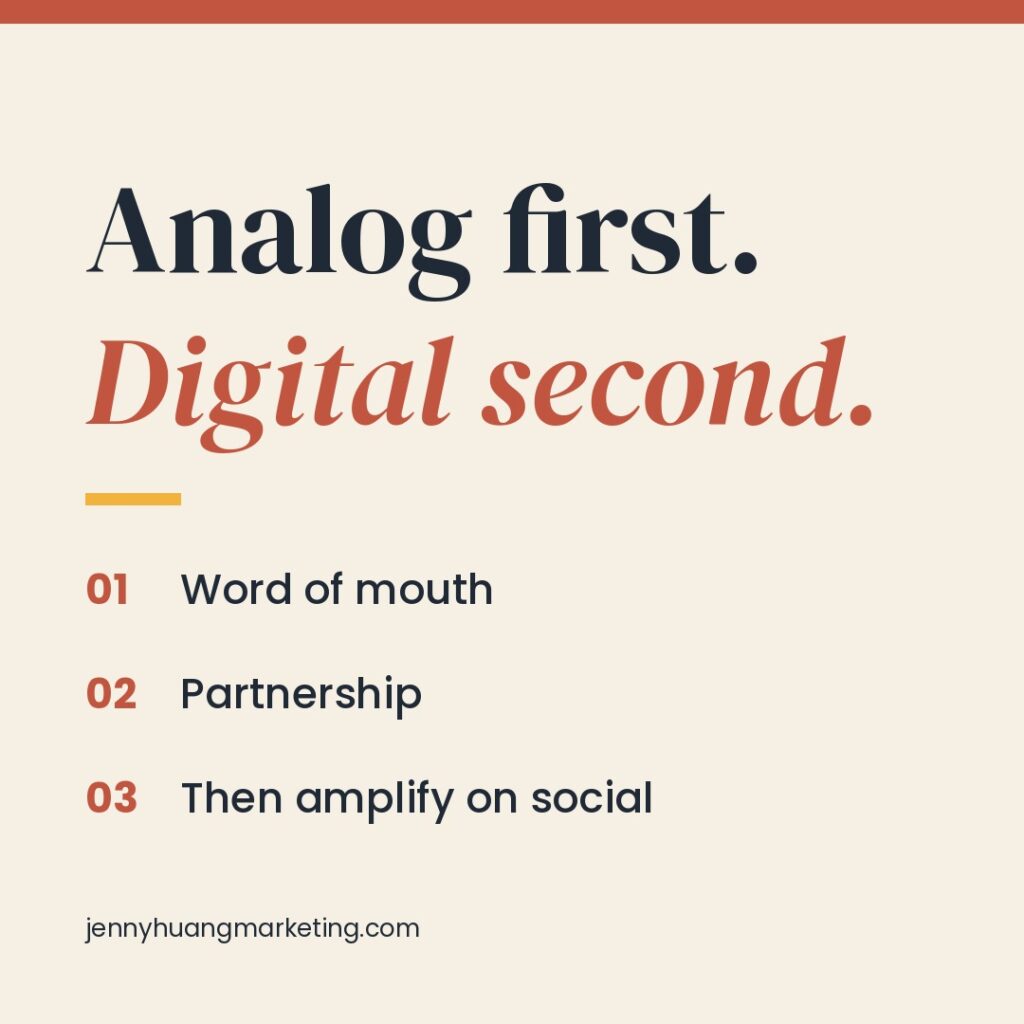 than any dashboard.
Once you’ve found the right customer tribes, you’ll know the formula you used to attract them. Then carry that formula onto social media: build customer profiles based on real people, and use AI to help identify similar businesses and audiences who want what you offer.
With a customer tribe in hand, you’ll give AI and social media much clearer direction on who you’re looking for and what results count as success.
So go do your analog marketing. In a crowded digital world, a real conversation stands out. It’s a breath of fresh air in a space that sorely needs one.
If you’d like a thinking partner as you shape your WOM and partnership strategy, book a discovery call with me. I’d love to get to know your business and figure out how I can best support your growth journey, from analog to digital and everything in between.
Cheers! Coach Jen